
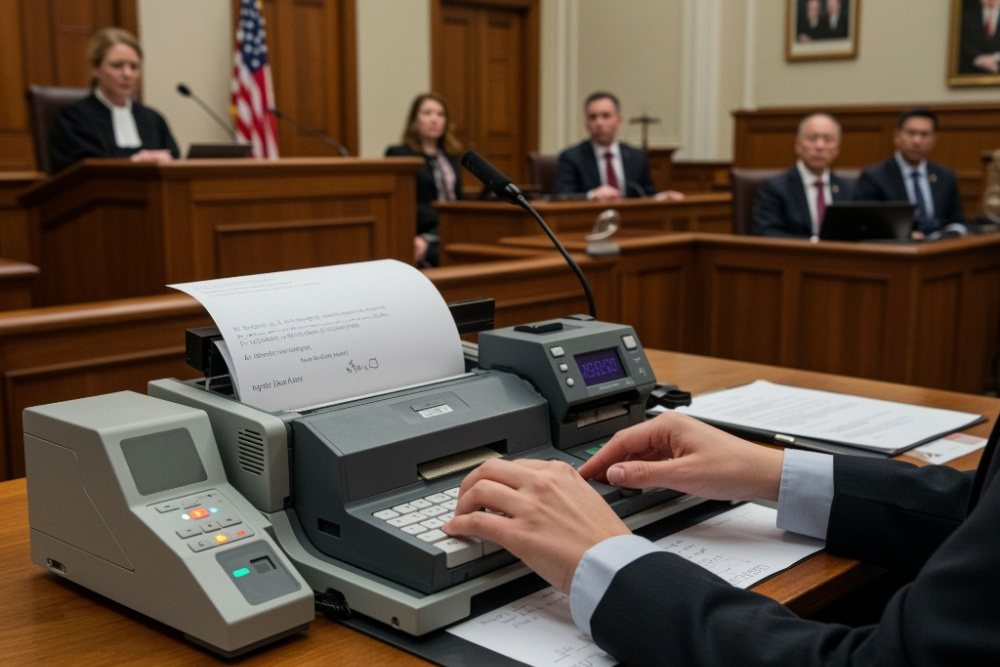
Court reporters play a far more significant role in litigation than many people realize. They are responsible for creating the official record of depositions, hearings, arbitrations, and trials—records that attorneys rely on for strategy, impeachment, appeals, and case preparation. In high-stakes litigation, the quality of the court reporter can directly influence the accuracy, efficiency, and reliability of the entire proceeding.
Yet not every reporter is the right fit for every case. Different matters require different levels of expertise, technical knowledge, and litigation support capabilities. Choosing the right reporter is not simply about availability—it is about ensuring that the professional assigned to your case has the skills and experience necessary to protect the integrity of the record. Understanding what to look for can help legal teams avoid costly issues and build stronger litigation workflows from the start.
Why the Right Court Reporter Matters
A court reporter is responsible for capturing testimony verbatim, often in fast-paced and high-pressure environments. Attorneys depend on this record to prepare motions, identify inconsistencies, and preserve testimony for trial or appeal.
An inaccurate or incomplete transcript can create serious problems, including:
- Misinterpretation of testimony
- Delays caused by corrections or disputes
- Reduced effectiveness during impeachment
- Challenges during appeals or motion practice
The right reporter helps prevent these issues by ensuring testimony is captured clearly, accurately, and professionally from the very beginning.
Start With Certification and Credentials
One of the first factors legal teams should evaluate is whether the reporter holds recognized professional certifications. Certified reporters have undergone formal testing and training to meet standards for speed, accuracy, and legal procedure.
Credentials demonstrate that the reporter:
- Understands court reporting ethics and standards
- Can produce legally compliant transcripts
- Maintains professional education and training
- Is qualified to handle complex proceedings
While certification alone does not guarantee the perfect fit, it establishes a baseline level of competency and professionalism that legal teams should expect.
Match the Reporter to the Case Type
Different cases demand different expertise. A reporter who handles routine civil matters may not be the best choice for highly technical litigation involving medical terminology, engineering concepts, or financial analysis.
For example:
- Medical malpractice cases require familiarity with healthcare terminology
- Patent litigation may involve complex scientific or technical language
- Corporate litigation may include financial and regulatory terminology
- International matters may require experience with interpreters and multilingual proceedings
Choosing a reporter with subject-matter familiarity reduces the likelihood of transcription errors and improves the overall accuracy of the record.
Evaluate Real-Time Reporting Capabilities
In many modern cases, attorneys benefit from real-time transcription services. Real-time reporting allows legal teams to view testimony live as it is spoken, helping them identify inconsistencies, prepare follow-up questions, and collaborate during proceedings.
However, not every court reporter is certified or experienced in real-time reporting. Legal teams should confirm whether the reporter can provide:
- Real-time streaming to multiple participants
- Reliable live text accuracy
- Technical support for remote access
- Integration with litigation software and digital workflows
For high-stakes depositions or complex hearings, these capabilities can significantly improve efficiency and strategic decision-making.
Consider Remote and Hybrid Proceeding Experience
Remote depositions and hybrid proceedings are now common across the legal industry. This shift has added a technical component to court reporting that goes beyond traditional stenography.
The right reporter should be comfortable managing:
- Remote videoconferencing platforms
- Digital exhibit handling
- Audio troubleshooting during remote sessions
- Coordination with videographers and interpreters
Reporters experienced in remote proceedings help ensure smooth operations, minimizing disruptions caused by technical issues or participant confusion.
Communication and Professionalism Matter
Court reporters interact with attorneys, witnesses, videographers, interpreters, and clients throughout the proceeding. Professionalism and communication skills are therefore essential.
The right reporter should demonstrate:
- Clear communication before and during proceedings
- Professional courtroom or deposition demeanor
- Responsiveness to scheduling and transcript requests
- The ability to remain calm under pressure
A reporter who communicates effectively contributes to a more organized and professional proceeding overall.
Accuracy and Quality Control Standards
Transcript quality depends not only on the reporter’s skill during the proceedings but also on the review process afterward. Legal teams should ask about quality control measures and editing procedures before selecting a reporting provider.
Strong quality assurance processes may include:
- Multi-level proofreading
- Technical terminology verification
- Consistency checks for formatting and speaker identification
- Final certification review before delivery
These processes help ensure that the transcript accurately reflects the testimony and meets court standards.
The Importance of Technology Integration
Modern litigation often involves more than transcripts alone. Attorneys may need synchronized video, searchable digital repositories, and real-time collaboration tools.
The right reporter—or reporting provider—should support integration with:
- Legal videography services
- Transcript-video synchronization
- Secure digital access platforms
- Exhibit management tools
This integration streamlines litigation workflows and enables legal teams to access and organize testimony more effectively.
Scheduling Reliability and Availability
Even the most skilled reporter cannot help if they are unavailable when needed. Law firms handling complex litigation often require flexible scheduling, expedited turnaround times, or support across multiple jurisdictions.
A reliable reporting provider should offer:
- Broad scheduling coverage
- Nationwide or multi-jurisdictional availability
- Expedited transcript delivery options
- Consistent staffing support for long-term matters
This scalability becomes especially important for firms managing simultaneous depositions or nationwide litigation.
Working With a Full-Service Litigation Support Team
In many cases, choosing the right reporter also means choosing the right litigation support provider. Full-service providers coordinate court reporting with videography, interpretation, trial technology, and digital transcript management.
This coordinated approach reduces administrative complexity and ensures that all services work together seamlessly. Providers like Renzi Legal Resources help legal teams manage every aspect of the proceeding through a single, experienced partner.
Why Renzi Legal Resources Matches the Right Reporter to the Right Case
Renzi Legal Resources understands that no two cases are identical. That is why reporter assignments are based not only on availability but also on subject-matter expertise, technical skill, and proceeding requirements.
Whether a case involves medical experts, multilingual testimony, remote participation, or real-time reporting, Renzi ensures that the reporting team is equipped to handle the demands of the matter. Combined with integrated litigation support services, this approach helps legal teams maintain accuracy, efficiency, and confidence throughout the litigation process.
Conclusion: The Right Reporter Strengthens the Entire Case
Choosing the right reporter is about far more than creating a transcript. It is about protecting the accuracy of the record, supporting litigation strategy, and ensuring that proceedings run smoothly from start to finish.
By evaluating certification, experience, technology capabilities, communication, and subject-matter expertise, legal teams can select reporters who align with the unique demands of their cases. With experienced professionals and comprehensive support from Renzi Legal Resources, attorneys gain a trusted partner dedicated to preserving every word with precision and professionalism.
FAQ
Why does subject-matter experience matter in court reporting?
Complex cases often involve technical terminology that requires familiarity to ensure accurate transcription and minimize errors.
Is real-time reporting necessary for every case?
Not always, but it is highly valuable in complex or high-stakes proceedings where attorneys need immediate access to testimony.
Can one provider handle reporting, videography, and remote depositions together?
Yes. Full-service litigation support providers coordinate these services to create a more seamless and efficient workflow.